Studio Sound: what one click does to a voice
7cubit Team
More in Engineering
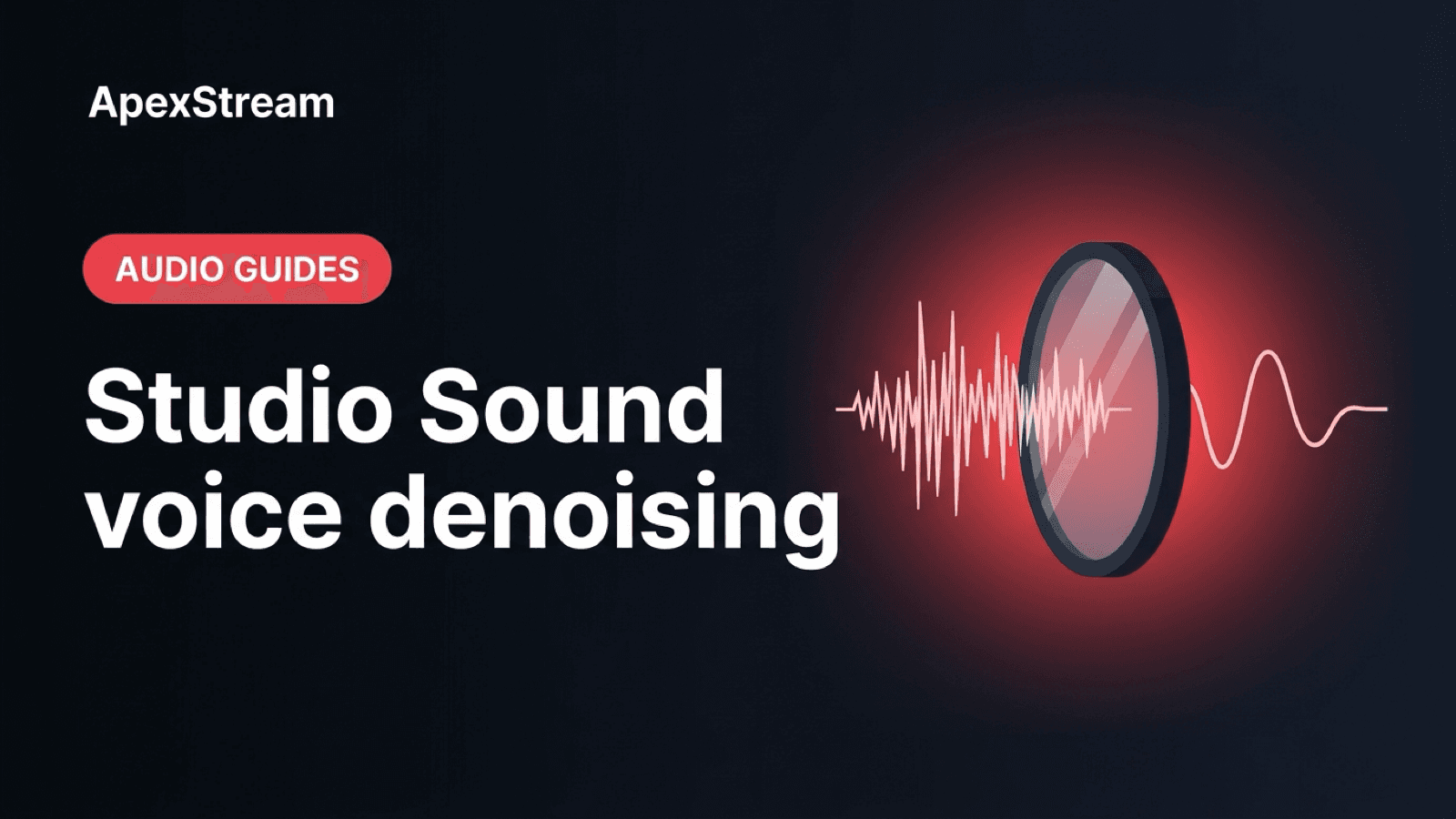
Studio Sound is a Podcast Studio export option, not Web Studio's live noise gate and not a voice-cloning tool. When the mastering worker builds a master, the option applies FFmpeg's FFT-based afftdn denoise step. It is available on Creator and above.
That makes it useful for a steady room problem, but it also means you should not turn it on without listening to the result.
Where it runs
During export, the worker builds a working WAV from the episode tracks, applies the EDL cuts, checks the studioSoundEnabled flag and tier, then runs denoise when eligible. Loudness normalization follows before the delivery MP3 is written.
The flag is kept in the export payload so the server sees the same choice as the editor. The backend checks the plan again; a Hobby client cannot unlock Creator processing by changing the browser request.
What FFT denoise is good at
afftdn estimates a noise profile in the frequency domain and reduces sound that behaves like stationary background noise. HVAC rumble, laptop fan hiss, power-supply whine, and a consistent room tone are the cases where it can make spoken audio easier to listen to.
It is not a beamformer, and it cannot fix a distant guest, a clipped microphone, or speaker echo. Web Studio's required RNNoise step protects the live capture path. Studio Sound is a later mastering step for residual noise in the podcast version.
When to leave it off
Listen for the spaces between words as well as the words themselves. Aggressive denoise can leave a watery edge, remove the air around consonants, or make a music bed feel smaller. The right result is usually the version that makes the room less distracting without making the processing itself the new distraction.
- Music-heavy episodes: cymbals, beds, and intentional texture can be mistaken for hiss.
- Already-mastered audio: a second denoise pass can undo choices made in a DAW.
- Intentional room sound: a quiet narrative style may use the room as part of its character.
- Creative effects: vinyl crackle, distortion, and designed noise may be part of the piece.
If you are unsure, export a short section with Studio Sound on and off. The source is non-destructive, so an A/B test does not change the recording.
When it is a good fit
Try it for an interview recorded in an untreated room, a solo show with a good mic and a noisy HVAC system, or a remote guest with a persistent fan nearby. Apply the editorial cuts first, then Studio Sound, then loudness normalization. There is little value in denoising audio that the EDL will delete.
Studio Sound does not replace a close microphone, headphones, or a careful recording setup. It is a repeatable cleanup step for the master, not a promise to repair every recording problem.
It also does not change the live recording retroactively. The live audience heard the captured signal; Studio Sound affects the Podcast Studio master produced at export. That separation lets you compare a clean podcast version with the original source when the live and post-production goals differ.
The honest version of the one-click story
A useful workflow is to export a short excerpt first, compare the processed and unprocessed versions on headphones, and then choose the setting for the full master. That keeps the decision editorial instead of assuming that more cleanup is always better.
For a recurring show, keep the same comparison excerpt so you can hear whether a change in microphone or room has changed the right setting. A preset choice is useful only when it still matches the recording in front of you.
That small test is especially useful when the episode mixes clean host audio with a noisier remote guest. You can choose the result that improves the room without flattening the clean track.
Creator+ gives you a real FFT denoise operation in the mastering worker. The source stays untouched, and the result can be compared with a version that leaves the switch off. Use it when the room is getting in the way of the voice. Leave it off when the room, music, or previous mastering is part of the intended sound.
Studio Sound is strongest when the noise is steady and the voice is worth preserving. It is not a substitute for capture discipline.